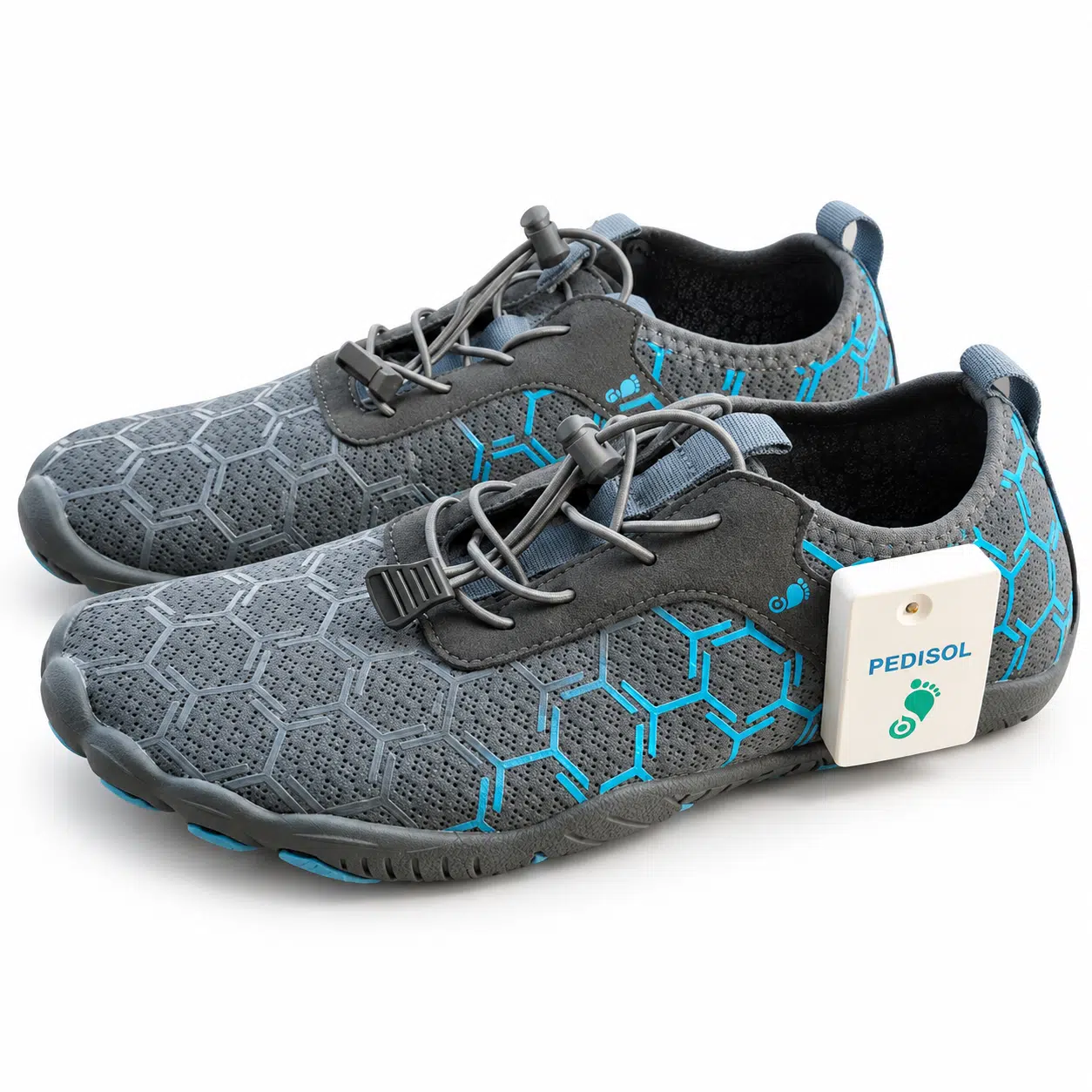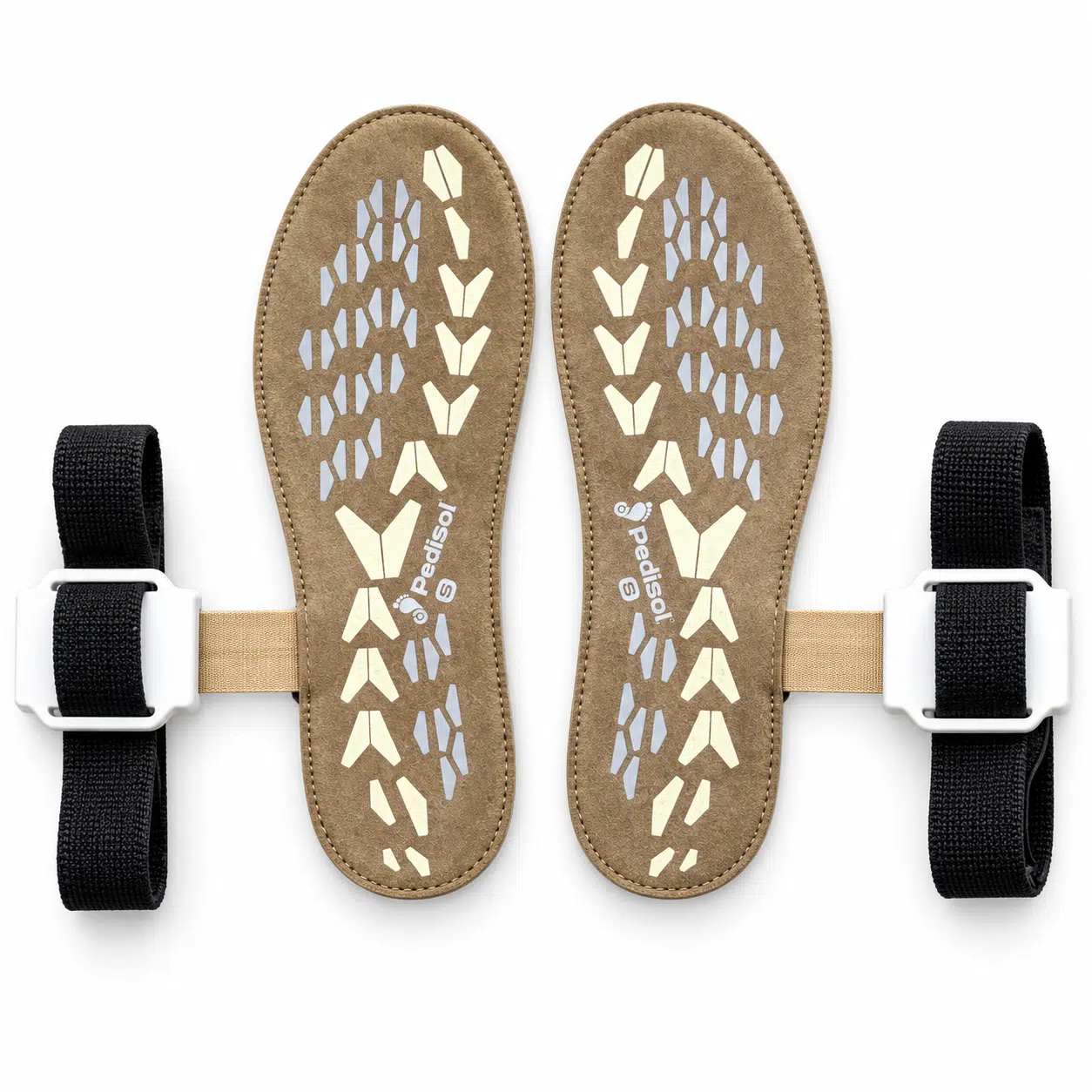

Clinic gait is often a single timed walk. Neurodegenerative change is usually a slow time series.
That mismatch is the starting point for this note. At VRsteps we work with plantar force and pressure from instrumented insoles, and we care about a practical question shared by clinicians, gait labs, and ML researchers: when does walking carry usable early signal, and how do we talk about that signal without pretending it is a diagnosis?
This post is the why. The companion post is the how: training on public Parkinson’s force data with multi-step windows, per-session scaling, and subject-wise validation. Neither post diagnoses disease. Neither claims FDA clearance. The goal is pattern insight people can discuss further, not a verdict.
What “early” has to mean if we are honest
“Early signal” is easy to say and easy to overclaim. In public writing we mean something narrower:
- Coverage. A short clinic trial samples best-behavior walking in an unfamiliar hallway. Home or continuous underfoot force captures more of the walking people actually do: morning stiffness, dual-task chatter, fatigue late in the day.
- Resolution of change. Many clinically meaningful shifts are gradual. Stride timing, loading asymmetry, and dual-task cost can drift before someone has a clean story for what feels “off.”
- Decision support, not substitution. A useful system surfaces anomalies and trends for clinical review. It does not replace exam, imaging, labs, or specialist judgment.
That framing matters for medical readers and for ML readers alike. If your loss function is optimized for a neat binary label, you will be tempted to talk like a diagnostic device. If your clinical workflow needs a flag for “look closer,” you want calibrated pattern language instead.
Why gait is a high-value window into nervous system strain
Walking looks automatic until it is not. It asks the nervous system to coordinate timing, force production, balance reactions, and attention under real gravity, usually while the person is also thinking about something else.
Decades of gait research have treated metrics such as gait speed, stride-time variability, asymmetry, and dual-task cost as windows into motor and cognitive load. Those measures are not magic biomarkers, and they are not disease-specific on their own. They are still among the most repeatable, low-friction ways to watch how motor control behaves in the wild.
For neurodegenerative conditions such as Parkinson’s disease and Alzheimer’s disease and other dementias, that matters because:
- Early motor change is often subtle relative to a single visit
- Families and clinicians can miss what accumulates between appointments
- Self-report is incomplete, especially when people adapt around problems (shorter routes, more sitting, avoiding dual task)
- Many care plans work better when decline is noticed sooner, even when the “notice” is only a reason to ask better questions
Gait sits in a useful middle ground: continuous in daily life, measurable without invasive procedures, and rich enough that sensors and models can flag pattern shifts relative to a person’s baseline or to carefully studied reference cohorts.
What clinicians already notice that sensors can make quantitative
Ask a neurologist, PT, or geriatrician what they watch in a hallway, and you will hear a familiar list: pace, step length, arm swing, turning, freezing, dual-task breakdown, fear of falling. Underfoot force and pressure add a complementary layer: how load rolls from heel to forefoot, how left and right differ, how those patterns change across minutes rather than across one staged walk.
That does not make plantar force a diagnostic assay. It does make it a strong substrate for monitoring:
- Longitudinal trends with quality filtering
- Dual-task contrasts when the protocol includes them
- Cohort-relative pattern flags that a human can interpret
For gait enthusiasts, the interesting part is the signal itself: center-of-pressure travel, stance and swing structure, and the way “healthy looking” averages can hide stride-to-stride instability. For AI researchers, the interesting part is that the same physiology is a messy time series with person-specific scale, session effects, and domain shift across hardware.
The measurement problem that makes clinic-only gait incomplete
A patient walks well in clinic. They pass. The note closes.
What a single number can miss:
- They needed arms on the chair that morning
- Dual-task walking at home falls apart even when usual walking looks fine
- Loading asymmetry has been drifting for months
- They avoided the “performance” walk last visit
None of that proves a diagnosis. All of it argues for time series thinking. If you only ever sample the hallway, you optimize for a snapshot. If you sample real walking, you inherit noise, missingness, and calibration headaches. That trade is real. It is also why public corpora like PhysioNet’s Gait in Parkinson’s Disease remain so useful for method development: they let teams practice subject-wise evaluation on force channels before claiming anything about home devices.
Language we refuse (on purpose)
We deliberately avoid:
- “predicts disease”
- “diagnoses NDD”
- “FDA-cleared screening”
- risk scores that sound like they decide care
Prefer: may help surface or flag gait patterns for further clinical discussion.
That is not marketing caution theater. It is how you keep trust with medical readers while still doing serious ML work.
Where VRsteps’ research sits
At VRsteps we turn plantar force and pressure time series into monitoring insights: pattern flags, longitudinal change, and clinician-facing review context. Product packaging and pricing are out of scope for this research series.
If you want the methods, read the companion post: How we train a gait model on public PD force data.
Closing
Gait will not replace a neurological workup. Used carefully, it can still be one of the earliest, most human-readable signals that something in motor control is changing. The open research problem is to measure that change honestly, validate it with subject-wise discipline, and present it as a prompt for clinical judgment rather than a substitute for it.
Follow VRsteps on LinkedIn for related research notes. Comments from clinicians, gait scientists, and ML practitioners are welcome, especially on what “actionable pattern” should mean in your setting.